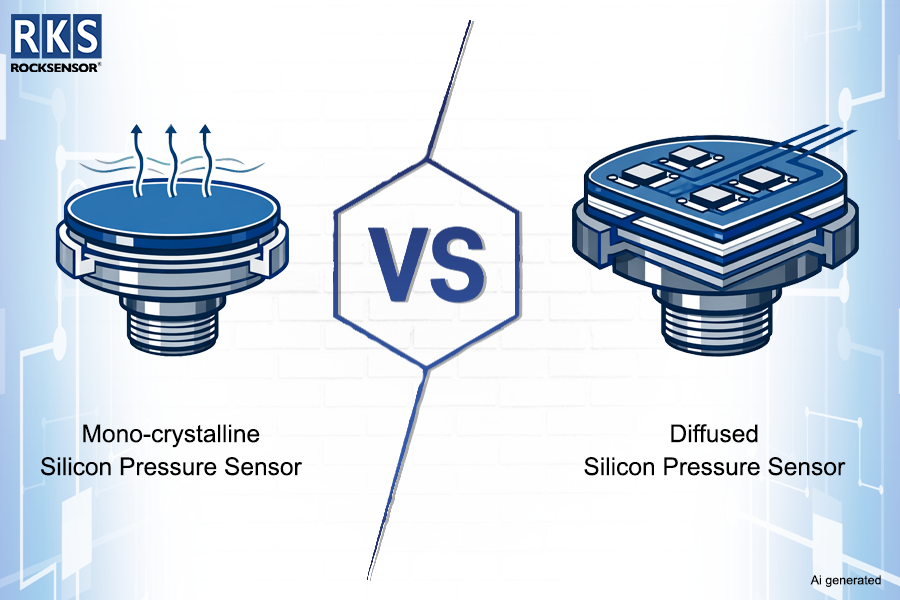
In the world of high-precision pressure measurement, monocrystalline silicon and diffused silicon represent two different generations of piezoresistive technology.
While both rely on the piezoresistive effect—where the electrical resistance of a material changes under mechanical stress—they differ significantly in how the sensing element is constructed and how it performs in industrial environments.
Comparison Matrix
| Feature | Diffused Silicon Sensor | Mono-crystalline Silicon Sensor |
| Lattice Structure | Less regular (polycrystalline/ doped) | High-purity, perfectly regular lattice |
| Accuracy (Typical) | 0.1% to 0.5% F.S. | 0.075%F.S. to 0.05%F.S. |
| Stability (Long-term) | Moderate (subject to drift) | Outstanding (very low creep) |
| Temp. Coefficient | Higher (requires complex compensation) | Inherently low |
| Overload Resistance | Standard | High (often up to 40x range) |
| Cost | Cost-effective / Economical | Premium / High-end |
1. Diffused Silicon Sensors (The Industrial Workhorse)
These are the most common sensors in the general industry. They are typically made by diffusing P-type impurities (like Boron) into an N-type silicon substrate to form a Wheatstone bridge.
- Structure: The sensing chip is usually protected by a stainless steel diaphragm and filled with silicone oil to transmit pressure.
- Pros: Very fast dynamic response and excellent price-to-performance ratio for standard hydraulics and oil/gas pipelines.
- Cons: They are highly sensitive to temperature. Without sophisticated external compensation circuits, the “zero point” (the reading at zero pressure) can drift significantly as the ambient temperature changes.
2. Mono-crystalline Silicon Sensors (The Precision Standard)
These represent an “upgraded” version of piezoresistive technology, often utilising MEMS (Micro-Electro-Mechanical Systems) technology and a “double-beam suspension” design.
- Structure: The core is a single, continuous crystal of silicon. Because the lattice is perfectly uniform, electron mobility is much higher and more predictable than in diffused silicon.
- Pros: Anti-Overload: Many designs use a “suspended” chip that isn’t directly crushed by pressure, allowing them to survive massive pressure spikes that would burst a standard diffused sensor.
- Hysteresis: The “memory” effect of the material is almost zero; the sensor returns to exactly the same value every time pressure is released.
- Cons: Higher manufacturing complexity leads to a significantly higher price tag.
Key Technical Distinction: “Creep” and “Hysteresis”
The primary reason engineers choose Mono-crystalline over Diffused is Elasticity.
- Diffused silicon behaves like a high-quality spring that might slightly lose its shape after being stretched a million times.
- Mono-crystalline silicon is closer to a “perfect” elastic body. This means its 5-year stability is often rated at 0.1%, whereas a diffused sensor might drift by 0.5% or more in the same period, requiring more frequent calibration.
Summary: Which one do you need?
- Use Diffused Silicon if: You are building a standard hydraulic system, water pump, or general industrial machinery where “good enough” accuracy (0.25%) is acceptable, and budget is a major factor.
- Use Mono-crystalline Silicon if: You are working in Process Automation (like a refinery or power plant), dealing with Differential Pressure (DP) flow measurement, or in any scenario where recalibrating the sensor is difficult or expensive.
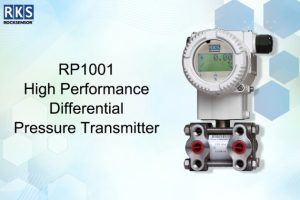
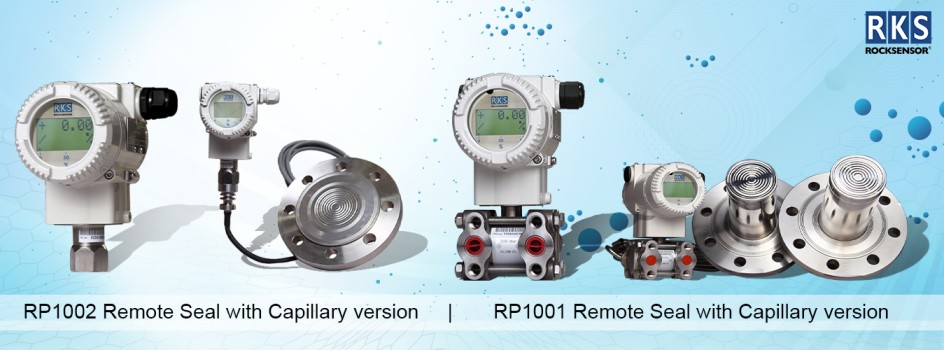
Rocksensor offers a Monocrystalline Silicon Piezoresistive Sensor with its RP1000 Series Transmitters.

Looking for accurate and reliable process measurement instruments?
Explore Rocksensor’s complete range of Pressure, Flow, Level & Temperature transmitters.
Download datasheets | Get a quote | Enquire today