Coal Bunker Level Measurement Using 80 GHz Radar Sensors
What is Coal Bunker Level Measurement?
Coal bunker level measurement involves monitoring the amount of coal present in bunkers or silos using advanced sensors. This ensures a continuous fuel supply, prevents production halts, and enables better inventory management. One of the most effective solutions is using 80 GHz radar level transmitters.
Importance of Accurate Coal Level Monitoring
- Prevents overflow and shortages
- Maintains a consistent coal supply for boilers and furnaces
- Improves inventory management
- Reduces the need for manual inspections
- Ensures safe and reliable operation
Challenges in Coal Bunker Measurement
Coal bunkers operate in harsh environments where traditional sensors struggle due to:
- High dust generation
- Uneven coal surfaces
- Vibrations and impact during filling
- Temperature variations
These challenges make non-contact radar sensors the most suitable solution.
Benefits of Radar-Based Coal Bunker Level Measurement
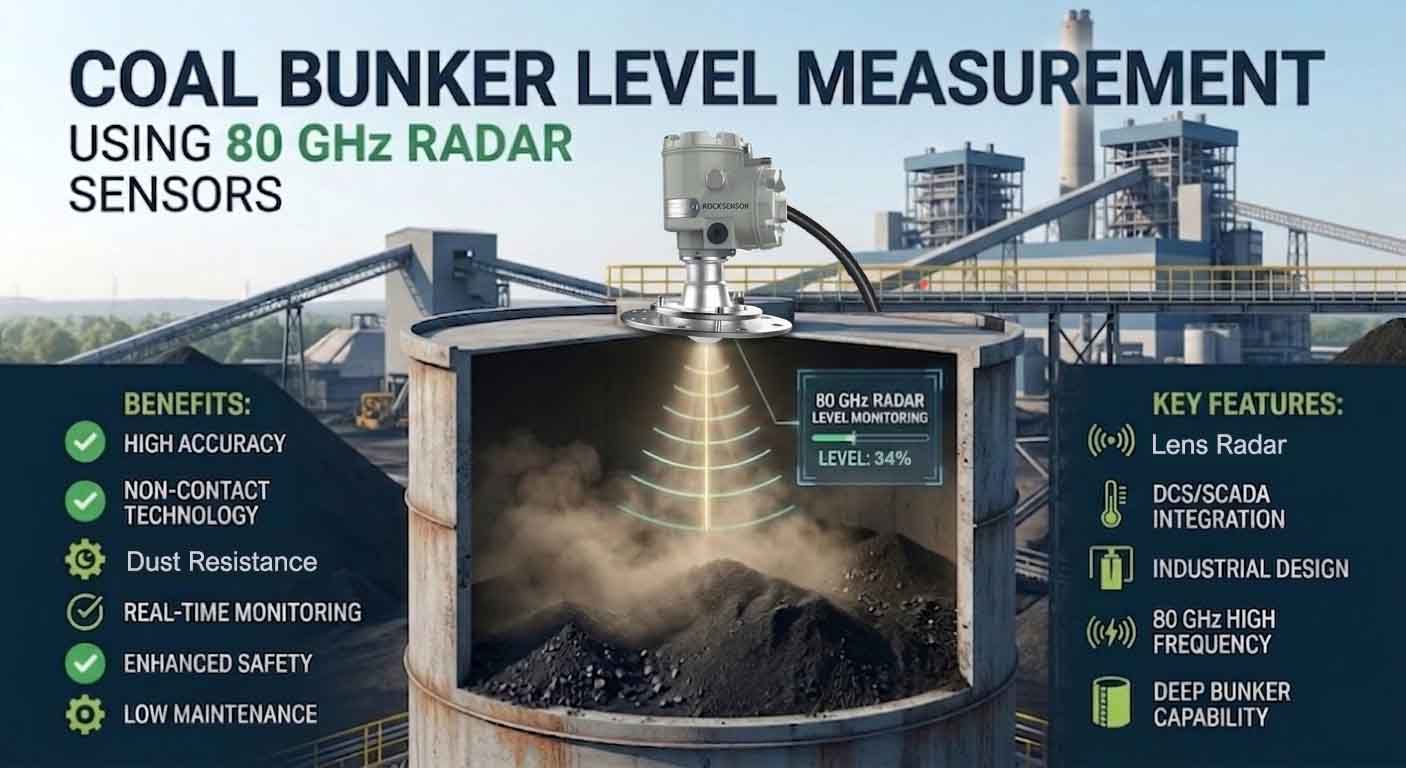
- High Accuracy: Electromagnetic waves accurately measure coal levels regardless of dust or temperature conditions.
- Non-Contact Technology: No physical contact, eliminating wear and measurement errors.
- Low Maintenance: No moving parts mean lower maintenance costs and longer sensor life.
- Real-Time Monitoring: Continuous data for better decision-making.
- Enhanced Safety: No need for physical inspections inside bunkers.
Key Features of 80 GHz Radar Level Transmitters
- High-precision measurement for deep and large bunkers
- Lens Antenna Technology for focused signal transmission
- Dust penetration capability for reliable readings
- SCADA/DCS integration for real-time monitoring
- Robust industrial design for long-term durability
How Radar Coal Level Measurement Works
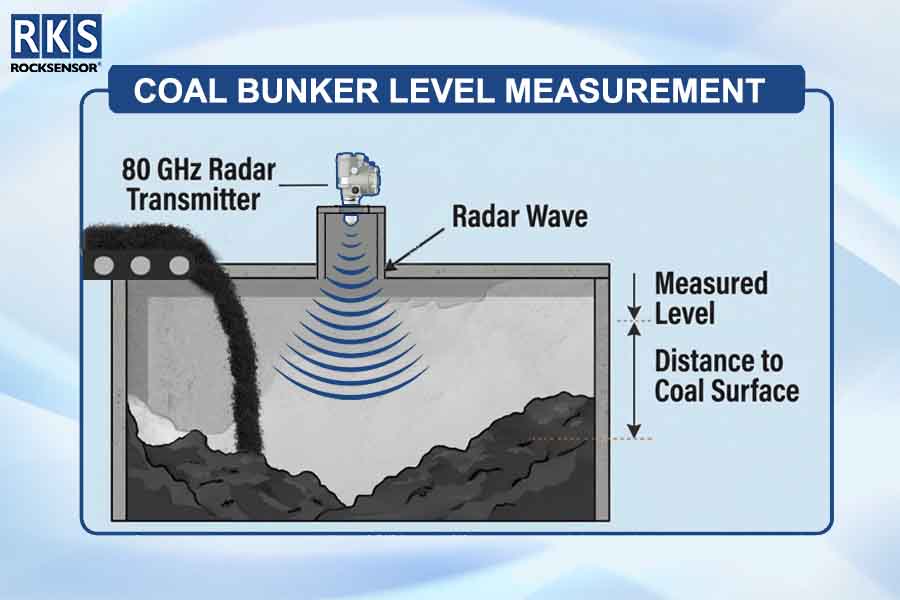
Radar level transmitters emit 80 GHz high-frequency signals toward the coal surface. Reflected signals are analyzed to calculate the exact distance and coal level inside the bunker. Lens antennas focus the signal, reducing interference from dust and silo walls.
Applications of Coal Bunker Level Measurement
- Power Plants: Ensures continuous coal feeding and prevents boiler shutdowns.
- Steel Industry: Maintains stable furnace operation with accurate coal supply.
- Cement Industry: Supports efficient raw material handling and inventory tracking.
How to Select the Right Coal Level Sensor
Consider the following factors when choosing a coal bunker level measurement system:
- Measurement range (based on bunker height)
- Frequency (80 GHz recommended for accuracy)
- Antenna type (lens antenna for dusty conditions)
- SCADA/DCS compatibility
- Industrial-grade durability
Installation Best Practices
- Install the sensor at the top of the bunker
- Ensure proper alignment of the radar beam
- Avoid obstacles in the signal path
- Perform periodic cleaning
- Calibrate when the bunker is empty
Benefits of Continuous Coal Level Monitoring
- Timely coal replenishment
- Prevention of equipment overload
- Improved inventory management
- Reduced operational downtime
- Better production planning
Why Choose Rocksensor for Coal Bunker Level Measurement?
Rocksensor provides advanced radar level transmitters designed for bulk material applications like coal bunkers.
- High-performance 80 GHz radar technology
- Reliable operation in extreme dust conditions
- Easy integration with SCADA systems
- Long service life with minimal maintenance
Rocksensor solutions ensure accurate, safe, and efficient coal level monitoring across industries.
Frequently Asked Questions (FAQs)
- Which technology is best for coal bunker level measurement?
Non-contact 80 GHz radar level transmitters provide the most accurate and reliable results. - Can radar sensors work in dusty environments?
Yes, radar sensors are unaffected by dust, making them ideal for coal bunkers. - Why is coal level monitoring important?
It ensures continuous operation, prevents downtime, and improves safety. - Are radar sensors better than ultrasonic sensors?
Yes, radar sensors provide more accurate and stable readings in harsh industrial conditions.
Conclusion
With 80 GHz radar sensors, industries can achieve precise and real-time coal bunker level measurements, even in hostile environments. This technology enables safer, more efficient operations, reduces downtime, and improves inventory management.

Learn more about specifications, installation, and pricing.